理想の住まいを、つくる
Every renovation begins with a quiet conversation between space and soul.
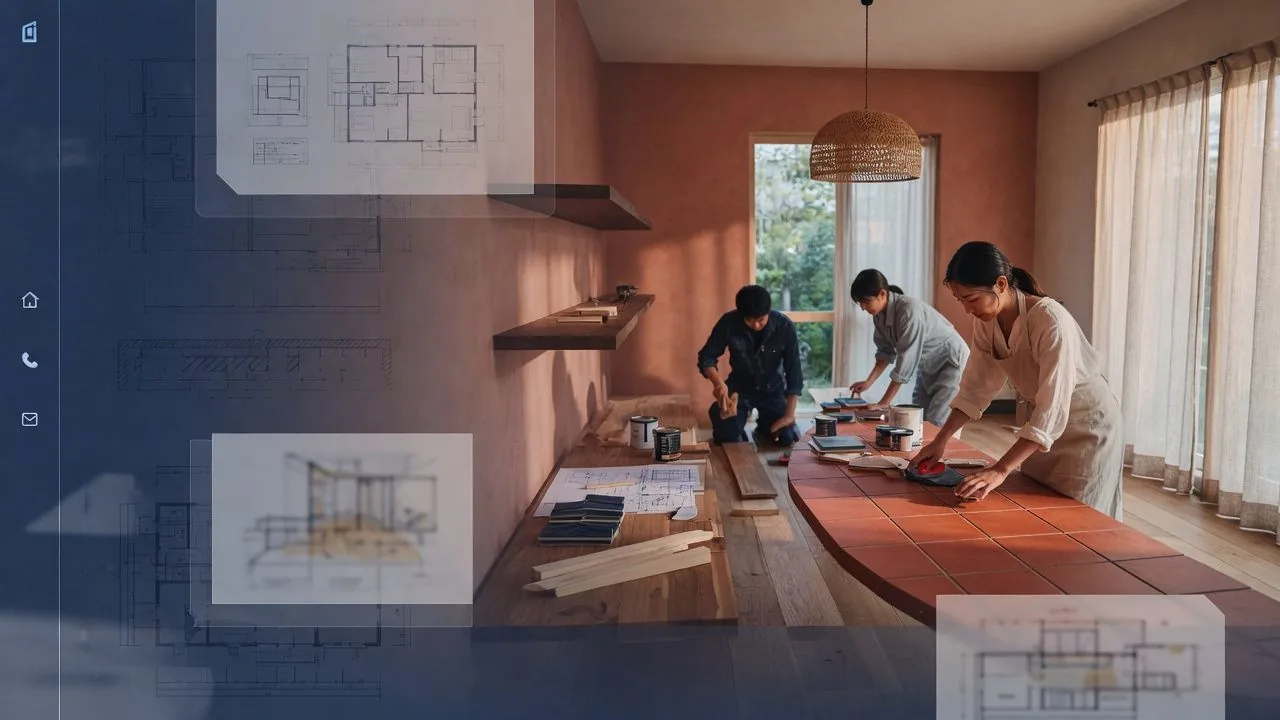
Every renovation begins with a quiet conversation between space and soul.
We believe renovation is less about construction and more about revelation—peeling back layers of neglect to uncover the potential that’s always been there. Like a master calligrapher preparing ink, we approach each project with reverence for the materials, the space, and the lives that will unfold within it. Our philosophy isn’t written in manuals; it’s etched into the grain of every beam we restore, the quiet rhythm of every sliding door we install, and the way light lingers just a moment longer in a room we’ve touched.
We don’t fill rooms; we curate emptiness. The Japanese concept of *ma*—the interval between things—is our north star. A well-placed alcove isn’t just storage; it’s a pause in the rhythm of daily life, a moment to breathe between the kitchen’s bustle and the bedroom’s stillness. We measure success by the silence a space holds, by how naturally a family gathers around a low table, or how effortlessly light moves from dawn to dusk.
Our carpenters don’t just build; they listen. The way a chisel bites into hinoki cypress, the sigh of a plane gliding over aged oak—these are the sounds of respect. We source our wood from sustainably managed forests in Akita and Shimane, where trees are felled in winter to minimize sap and maximize grain integrity. Every joint is cut by hand, not for nostalgia, but because a machine can’t feel the wood’s resistance, can’t adjust for its quirks. This is how we ensure your home doesn’t just stand, but endures.
We treat light like a tangible element—bending it, filtering it, letting it pool in corners like water. A renovation isn’t complete until we’ve traced the path of sunlight through your space at three different times of day. We use washi paper screens to diffuse harsh afternoons, install deep eaves to welcome winter’s low angles, and position mirrors to catch the last golden hour. The result? Rooms that feel alive, shifting with the seasons like a living organism.
True luxury isn’t marble countertops or smart appliances—it’s the quiet harmony of a space that supports your rituals. We design for the way you *actually* live: the morning rush, the lazy Sundays, the impromptu gatherings. That means hidden storage for clutter, durable surfaces that age gracefully, and layouts that flow like a tea ceremony. Our goal? A home that feels so effortlessly yours, you’ll forget it was ever designed at all.
Every material has a voice. The creak of hinoki underfoot, the cool kiss of Arita porcelain, the way washi paper absorbs sound—we choose materials not just for their looks, but for how they *feel* in your hands and under your feet. We work with artisans who still fire clay in wood-burning kilns, who harvest lacquer from trees in Wakayama, who weave tatami from igusa grass grown in Kumamoto’s mineral-rich soil. These aren’t just finishes; they’re a dialogue between your home and the earth.
A KIRA renovation isn’t just for you—it’s for the next generation. We design with timelessness in mind, using joinery techniques that allow for disassembly and repair, materials that patina beautifully with age, and layouts that adapt to changing needs. Our water-based stains and natural oils ensure your home remains a healthy environment for decades. This is our promise: a space that grows more beautiful with time, like a well-loved book whose pages soften with each reading.
Our process isn’t linear—it’s a spiral, circling back to refine, adjust, and deepen at every turn. Like the layers of a lacquered bowl, each phase builds upon the last, until what began as a simple conversation becomes a space that feels inevitable, as if it was always meant to be. Here’s how we bring your vision to life, with transparency, precision, and a touch of magic.
We begin not with measurements, but with listening. Over cups of matcha in our studio or during a walk through your space, we’ll ask: What frustrates you about your home? What rituals do you long to create? What memories do you want to honor? We’ll share sketches of past projects, swatches of wood and fabric, and stories of how others have transformed their spaces. By the end of this conversation, we’ll have the first threads of your renovation’s narrative.
Now, we measure—not just walls and windows, but the intangible. How does light move through the space at dawn? Where does the air feel stale? What’s the sound of your footsteps on the current floor? We’ll document every detail, from the slope of the ceiling to the grain of the existing wood, using laser scanners and hand-drawn sketches. This phase culminates in a 3D model you can “walk through” virtually, complete with material samples and lighting simulations.
Design isn’t a single “aha” moment—it’s a series of revelations. We’ll present three distinct concepts, each with its own mood board, material palette, and spatial flow. One might emphasize warmth with cedar and clay, another sleekness with steel and glass. We’ll refine the chosen direction together, tweaking layouts, testing finishes, and even mocking up key details in our workshop. By the end, you’ll have a set of blueprints that feel less like technical drawings and more like a love letter to your future home.
This is where your home begins to take on its character. In our materials library—a sunlit loft filled with wood planks, stone slabs, and fabric bolts—you’ll touch, smell, and compare options. We’ll guide you through the nuances: the way hinoki’s citrusy aroma fades to a honeyed warmth, how Arita porcelain’s glaze catches the light, or why a particular tatami weave feels springy underfoot. We’ll also introduce you to the artisans who’ll craft your custom pieces, from the Kyoto lacquerer to the Osaka metalworker.
Now, the alchemy begins. Our team of carpenters, plasterers, and finishers—each a master of their craft—will transform your space with quiet precision. You’ll receive weekly updates with photos and videos: the first cuts of your custom kitchen island, the delicate application of urushi lacquer, the way a sliding door glides into its track. We’ll invite you to visit the workshop to see your pieces in progress, to run your hands over the wood before it’s installed. This is where the soul of your home is born.
The final 10% takes 90% of the effort. We’ll spend days adjusting the tension of every drawer, the angle of every light fixture, the way your favorite chair sits in the bay window. We’ll test the acoustics, the airflow, the way morning light spills across the floor. Our team will move through your space like a tea master preparing a ceremony—each gesture deliberate, each detail considered. By the end, your home won’t just look finished; it will *feel* finished, as if it’s been waiting for you all along.
The day we hand you the keys is always emotional. We’ll walk through your home together, pointing out the details you might miss: the way the grain of the oak floor aligns with the window’s mullions, how the bathroom’s cedar ceiling absorbs sound, or the hidden drawer in the entryway for keys and mail. We’ll leave you with a hand-bound book documenting the process, from first sketches to final photos, and a small gift—a ceramic cup or a wooden spoon—crafted by one of the artisans who worked on your home. Then, we’ll step back and let you begin your new life in the space.
Our team isn’t just a group of professionals—we’re a family of obsessives, each with our own specialty, united by a shared reverence for craftsmanship and space. From the carpenter who can coax a curve from a single plank of oak to the designer who sees potential in a crumbling concrete wall, we’re bound by a belief that renovation is as much about emotion as it is about structure. Get to know the people who’ll be shaping your home.
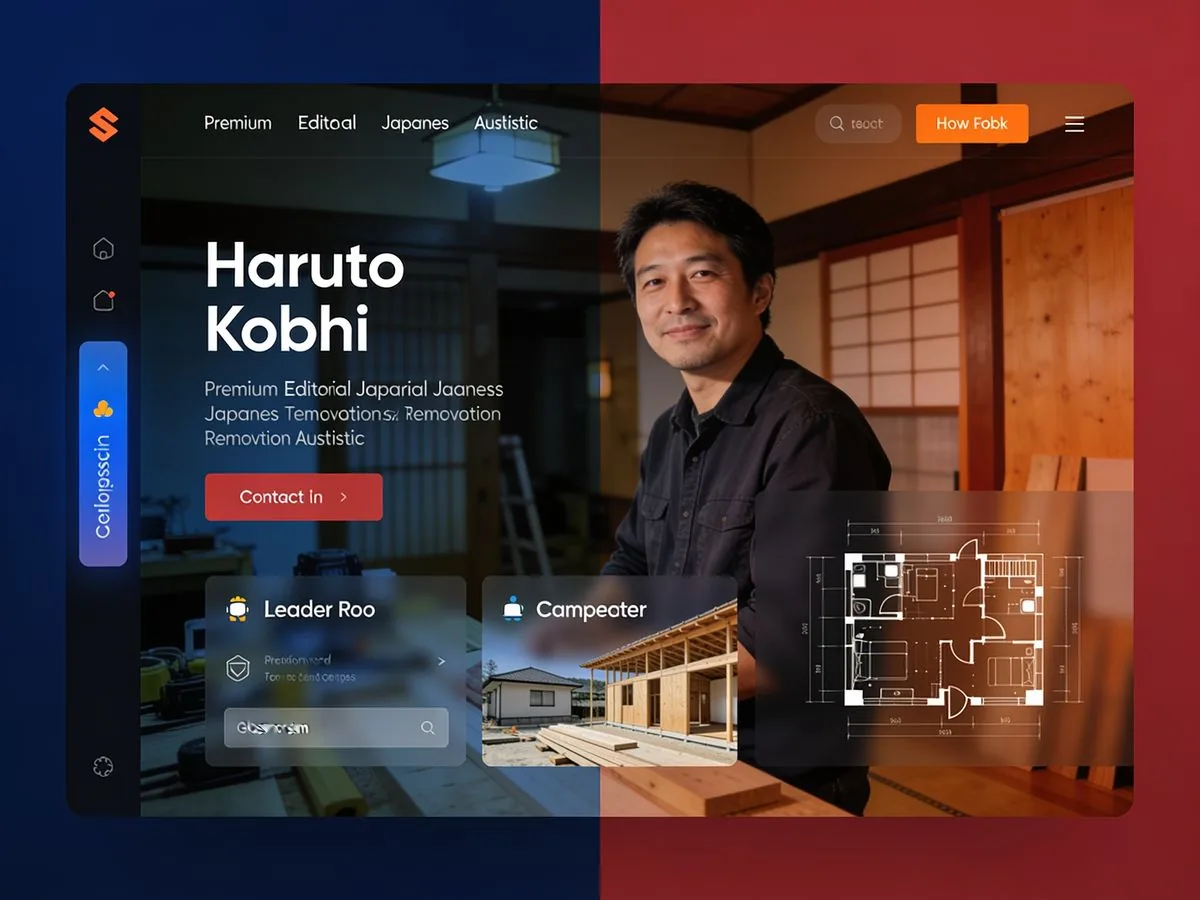
Haruto’s hands have shaped over 300 renovations, from tiny Tokyo apartments to historic machiya townhouses. A third-generation carpenter, he trained under a master in Kyoto before founding KIRA in 2012. His signature? Invisible joinery—seamless connections that make a space feel like it’s held together by magic.
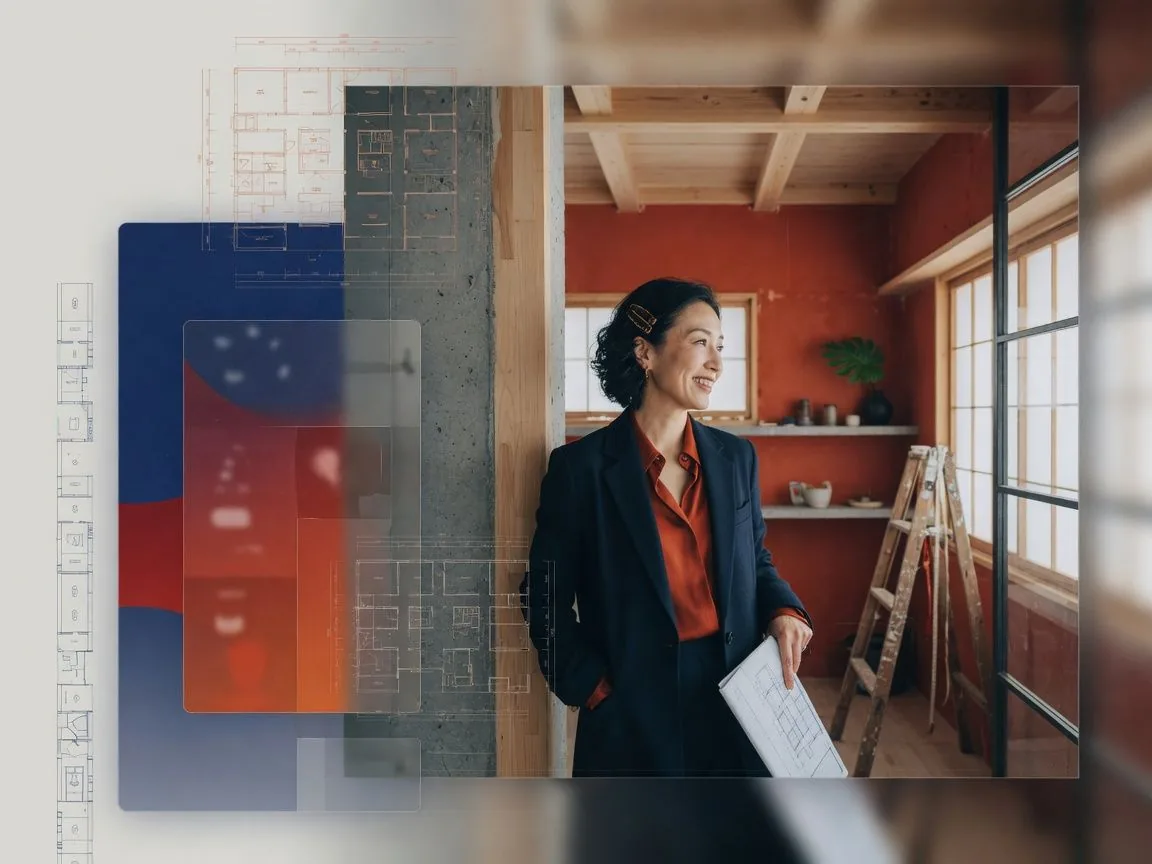
Aoi’s designs have been featured in *Casa BRUTUS* and *Elle Decor Japan*. A graduate of Musashino Art University, she blends Japanese minimalism with modern functionality, always with an eye for how light and shadow play across surfaces.
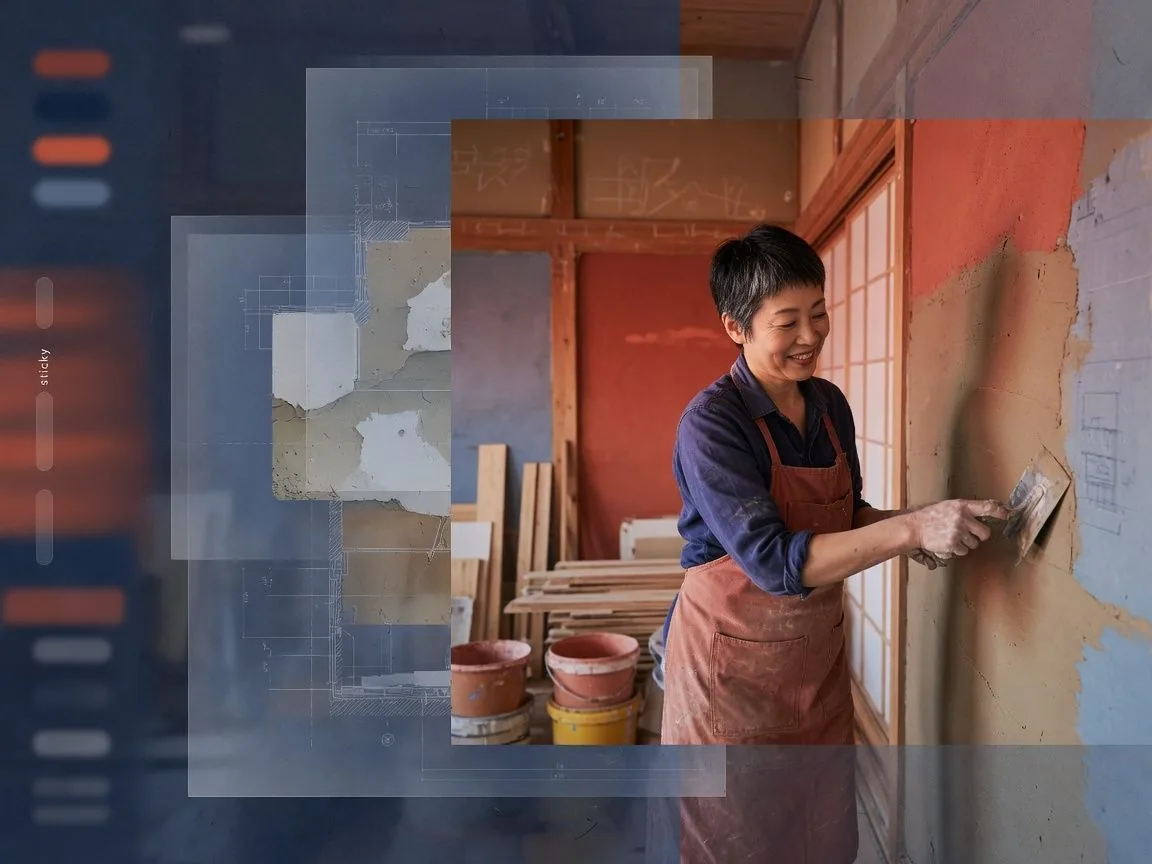
Ren’s work is a study in texture. Whether he’s applying *shikkui* plaster to a wall or hand-troweling a clay finish, his surfaces have a depth and warmth that machine-made materials can’t replicate.
Mio is the alchemist of our team, responsible for sourcing the rare and beautiful materials that define our projects. She travels the country visiting artisans—lacquerers in Wajima, papermakers in Gifu, weavers in Okinawa—to find the perfect pieces for each renovation.
Takumi is the glue that holds every project together. With a background in both construction and client relations, he translates between the artisans’ technical language and the homeowners’ dreams.
Yuki believes light is the soul of a space. With a degree in architectural lighting from Parsons and experience working with Isamu Noguchi’s studio, she designs lighting schemes that transform how a room feels.
The youngest member of our team, Sora is a prodigy with wood. A graduate of the Kyoto Institute of Technology, she’s already mastered the art of *kanawa-tsugi* (Japanese scarf joint) and is now learning the intricacies of *shou sugi ban* (charred cedar).
Eiji is our resident historian, specializing in the restoration of traditional Japanese homes. With a deep knowledge of *machiya* townhouses and *kominka* farmhouses, he’s the one we call when a project involves preserving original features like *ranma* transoms or *tokonoma* alcoves.
Our values aren’t just words on a wall—they’re the compass that guides us, from the way we source materials to how we treat our team. They’re the reason a client once told us, 'I didn’t just get a renovation; I got a home that feels like me.' These principles ensure that every KIRA project, whether it’s a tiny studio or a sprawling machiya, carries the same soul: thoughtful, enduring, and deeply human.
We believe that true craftsmanship is a form of devotion. Our carpenters spend years mastering techniques like *ari-tsugi* (ant joint) and *kanawa-tsugi* (iron ring joint), not because they’re faster, but because they’re more beautiful and durable. We reject the disposable culture of 'good enough'—every cut, every finish, every hidden joint is executed with the same care as a temple’s *tokyō* bracket system. This pride extends to our tools: we sharpen our chisels daily, oil our planes weekly, and treat our saws like the extensions of our hands that they are.
We see materials as living things, each with its own history and potential. That’s why we source our hinoki from sustainably managed forests in Akita, where trees are felled in winter to minimize sap and maximize grain integrity. Our plaster comes from a single quarry in Shiga, where the clay’s mineral content gives it a subtle iridescence. We work with artisans who still harvest lacquer from trees in Wakayama, weave tatami from igusa grass grown in Kumamoto, and fire clay in wood-burning kilns. To us, these aren’t just finishes—they’re a dialogue between your home and the earth.
Every home has a story waiting to be told. Maybe it’s the way a *tokonoma* alcove can frame a single piece of art, or how a well-placed window can capture the sunset over Tokyo Tower. We don’t just renovate; we uncover the narrative that’s already there. This means listening—really listening—to how you live: the rituals you cherish, the frustrations you’ve learned to tolerate, the dreams you’ve tucked away. Our designs honor these stories, creating spaces that feel inevitable, as if they’ve always been yours. As one client put it: 'I didn’t know my apartment could feel this... *right*.'
A KIRA renovation isn’t just for today—it’s for the next generation. We design with timelessness in mind, using joinery techniques that allow for disassembly and repair, materials that patina beautifully with age, and layouts that adapt to changing needs. Our water-based stains and natural oils ensure your home remains a healthy environment for decades. We also prioritize salvaged materials: reclaimed wood from old temples, vintage tiles from demolished bathhouses, even antique doors repurposed as headboards. This isn’t just eco-friendly—it’s a way of honoring the past while building for the future.
Renovations can feel like a black box: you hand over your home and hope for the best. We change that. From day one, you’ll have access to a shared digital dashboard where you can track progress, view real-time photos, and communicate with the team. We’ll walk you through every decision, from why we’re using *shikkui* plaster instead of drywall to how we’re routing your plumbing. Our pricing is clear and upfront—no hidden fees, no surprises. And if something goes wrong (which, let’s be honest, happens in construction), we’ll tell you immediately and present a solution. This is your home, and you deserve to be in the loop.
*Wa*—harmony—isn’t just a concept; it’s the foundation of how we work. It’s in the way our team collaborates, each person’s expertise complementing the others. It’s in how we design spaces that flow seamlessly from one function to the next, like a well-choreographed dance. And it’s in how we treat our clients: with respect, patience, and a deep commitment to understanding your vision. This harmony extends to the materials we choose, the way we balance light and shadow, and even the way we clean up at the end of the day. As one client told us: 'I didn’t just get a beautiful home—I got peace of mind.'
We’re only as good as the network of makers, thinkers, and doers who share our vision. These are the people and companies we turn to again and again—not just for their skill, but for their integrity, their passion, and their willingness to push boundaries. From the lacquerer in Wajima who still mixes his own pigments to the hardware manufacturer in Osaka experimenting with recycled metals, these partnerships are the secret sauce of every KIRA renovation. Here’s a glimpse into the ecosystem that brings our projects to life.
For over 150 years, this family-run workshop in Ishikawa Prefecture has been crafting *urushi* lacquerware using techniques passed down through generations. Their lacquer, harvested from trees in Wakayama, is prized for its depth and durability. We collaborate with them to create custom finishes for everything from kitchen cabinets to decorative screens.
This forestry cooperative in Akita supplies us with some of the finest hinoki and sugi cypress in Japan. Their trees are sustainably managed, with selective logging practices that ensure the forest remains healthy for centuries. The hinoki we source from them is particularly special: slow-grown in mineral-rich soil, it has a tight grain and a citrusy aroma that fills the workshop when it’s cut.
This clay quarry in Shiga Prefecture has been supplying potters and plasterers for over 300 years. Their clay is unique: rich in minerals, it has a subtle iridescence and a texture that’s both smooth and tactile. We use it for our *shikkui* plaster walls, which are applied by hand and left to cure naturally.
This cooperative of farmers in Kumamoto grows the igusa grass used to weave tatami mats. Their grass is cultivated in mineral-rich volcanic soil, giving it a vibrant green color and a springy texture. We use their tatami in our traditional Japanese rooms, as well as in modern applications like wall panels and headboards.
This metalworking studio in Osaka specializes in custom hardware for traditional Japanese architecture. We collaborate with them to create everything from hand-forged door handles to intricate *ranma* transom grilles. Their work is a blend of old and new: they use traditional techniques like *tankin* (hammering) and *mokume-gane* (wood-grain metal), but also experiment with modern materials like recycled aluminum and titanium.
This paper-making workshop in Gifu has been crafting *washi* (traditional Japanese paper) since the Edo period. Their paper is made from the inner bark of the *kozo* (mulberry) tree, which is boiled, beaten, and then formed into sheets by hand. We use their washi for everything from sliding door panels to lighting fixtures, drawn to its strength, texture, and ability to diffuse light beautifully.
This lacquerware museum and workshop in Kyoto is our go-to for custom lacquered pieces. Their artisans are masters of *maki-e* (sprinkled picture) and *raden* (mother-of-pearl inlay), creating designs that range from subtle geometric patterns to elaborate nature scenes. We’ve collaborated with them on projects like a lacquered dining table embedded with gold leaf cherry blossoms and a bathroom vanity with a *maki-e* wave motif.
This glassblowing studio in Toyama is known for its innovative designs and sustainable practices. We work with them to create custom light fixtures, from delicate *andon* lanterns to modern pendant lights. Their glass is made from recycled materials, including old windows and bottles, which are melted down and reblown into new forms. Their current project? Developing a line of glass tiles made from discarded smartphone screens.
CEDAR GROVE LIGHT wasn’t built in a day—it grew from a single carpenter’s dream into a collective of artisans, designers, and thinkers united by a shared vision. Our story is one of craftsmanship, collaboration, and a deep belief that homes should be more than just functional—they should be sanctuaries. Here’s a look at the milestones that have shaped us, from our humble beginnings to our current role as leaders in Japanese renovation.
Haruto Kobayashi, a third-generation carpenter, founds CEDAR GROVE LIGHT in a small workshop in Kyoto. Frustrated by the disposable culture of modern construction, he sets out to prove that renovations can be both beautiful and enduring. His first project? Restoring a 100-year-old machiya townhouse for a young family, using traditional joinery techniques and salvaged materials. The result—a home that blends old and new seamlessly—earns local acclaim and sets the tone for KIRA’s future. Haruto’s mantra: 'A home should last longer than its mortgage.'
Sora Kimura, a recent graduate of the Kyoto Institute of Technology, joins KIRA as its first apprentice. A prodigy with wood, she quickly masters the art of *kanawa-tsugi* (iron ring joint) and begins experimenting with modern interpretations of traditional techniques. Her work catches the eye of *Casa BRUTUS* magazine, which features KIRA in a spread on emerging Japanese designers. This exposure brings in a wave of new clients, including a boutique hotel in Gion that commissions KIRA to renovate its guest rooms. The project—completed in just three months—earns KIRA its first industry award: the Kyoto Craftsmanship Prize.
Aoi Yamamoto, a designer with a background in theater set design, joins KIRA as its first Design Director. Her arrival marks a turning point for the company: she introduces a more holistic approach to renovation, focusing on how spaces *feel* as well as how they look. Her first major project—a tiny Tokyo apartment transformed into a serene retreat—is featured in *Elle Decor Japan* and goes viral on social media. The design, which includes a hidden bed, a *tokonoma* alcove, and a cedar-clad bathroom, becomes a template for KIRA’s future work. This year also sees the launch of KIRA’s first website, designed to showcase their portfolio and attract international clients.
KIRA begins collaborating with a network of artisans across Japan, from lacquerers in Wajima to tatami weavers in Kumamoto. This expansion allows them to offer bespoke materials and finishes, elevating their projects to new heights. One standout project this year: the renovation of a 1970s apartment in Osaka, where KIRA replaces the original concrete walls with *shikkui* plaster, installs custom *washi* lighting, and creates a *tokonoma* alcove with a hidden storage compartment. The project wins the Japan Interior Design Award and cements KIRA’s reputation as a leader in modern Japanese renovation. This year also sees the launch of KIRA’s first showroom, a sunlit loft in Kyoto where clients can touch and feel materials before committing.
Like many businesses, KIRA is forced to adapt during the COVID-19 pandemic. They launch a series of virtual consultations, allowing clients to explore materials and designs from the safety of their homes. They also pivot to smaller projects, like kitchen and bathroom renovations, which can be completed more quickly and with less disruption. One silver lining: the pandemic leads to a surge in demand for home offices and multi-functional spaces. KIRA responds with a new line of modular furniture, designed to adapt to changing needs. This year also sees the launch of KIRA’s first online journal, featuring articles on Japanese design, craftsmanship, and renovation tips.
KIRA commits to sustainability in a big way, launching a new initiative to reduce waste and source materials responsibly. They begin using reclaimed wood from old temples and salvaged tiles from demolished bathhouses, and they switch to water-based stains and natural oils. This year also sees the launch of KIRA’s first 'circular renovation' project: a 1960s apartment in Tokyo where 90% of the materials are either reclaimed or recycled. The project earns KIRA the Green Building Award and attracts the attention of international media. This year also marks the opening of KIRA’s second showroom, this one in Tokyo, designed to showcase their sustainable materials and techniques.
Today, CEDAR GROVE LIGHT is a collective of over 20 artisans, designers, and project managers, with a portfolio of over 300 projects across Japan. We’ve expanded our services to include everything from tiny apartment renovations to historic machiya restorations, and we’ve launched a new line of modular furniture designed to adapt to changing needs. Our work has been featured in *Architectural Digest*, *Monocle*, and *NHK World*, and we’ve won over a dozen industry awards. But our proudest achievement? The homes we’ve helped create—the spaces where families gather, where memories are made, where life unfolds. As we look to the future, we’re excited to continue pushing the boundaries of Japanese renovation, blending tradition with innovation, and crafting spaces that feel like home.
Let’s craft a space that tells your story.
Your home is more than just walls and floors—it’s the backdrop to your life, the stage for your rituals, the sanctuary where you recharge. At KIRA, we don’t just renovate; we listen, we dream, and we craft spaces that feel as unique as you are. Whether you’re looking to transform a tiny studio or restore a historic machiya, we’re here to guide you every step of the way—with transparency, precision, and a deep respect for craftsmanship. Let’s start the conversation today.